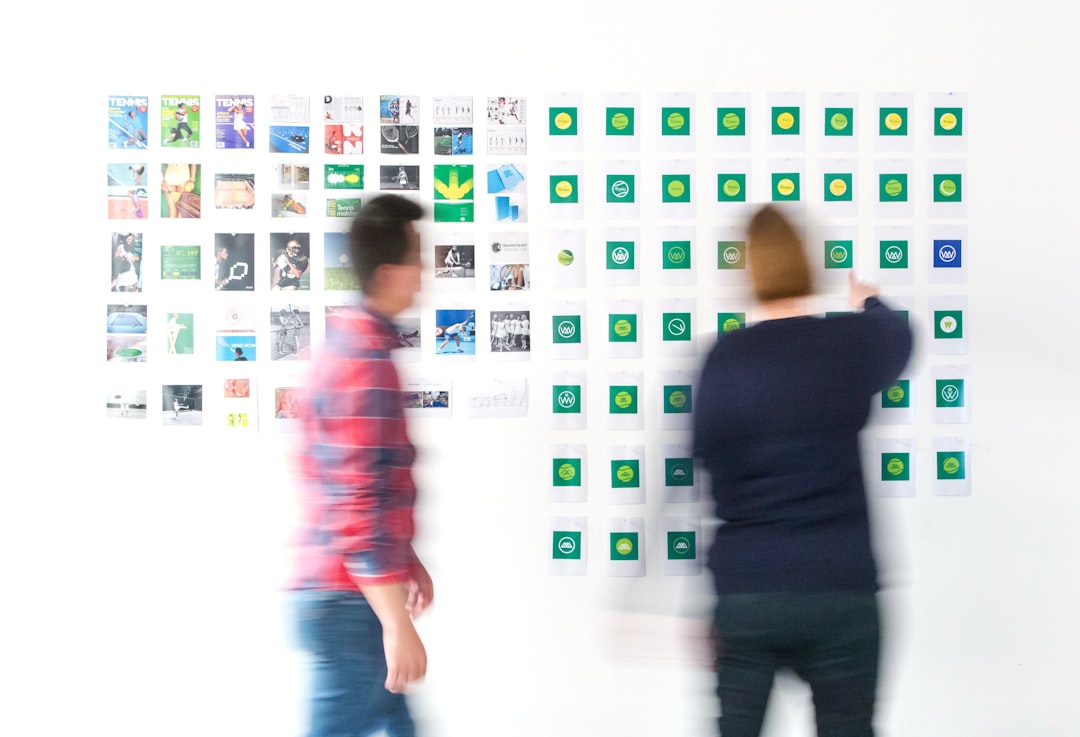
Quantum logo design ages quickly when teams lean on the same visual shortcuts: glowing atoms, orbit lines, vague gradient galaxies, and abstract “future tech” marks that could belong to almost any startup. This article is a practical trend tracker for founders, design leads, and technical teams building a quantum visual identity. It outlines what is overused, what still works, what appears to be changing across the sector, and how to review your own logo system on a recurring schedule so your brand stays distinctive instead of blending into the deep-tech background.
Overview
If you work in quantum computing branding, logo design is rarely just about drawing a symbol. It becomes a shorthand for credibility, technical maturity, and category fit. A logo may appear on a product dashboard, a research paper, a hiring page, a slide for investors, a booth backdrop, and a Git repository. That means the mark has to do more than look advanced. It has to survive real use.
The challenge is that quantum startup branding often develops inside a crowded visual environment. Many teams are trying to signal similar things at once: precision, scientific rigor, computational power, novelty, and trust. The result is a predictable design cluster. You see circular motion, particles, wave-like forms, neon blue gradients, and minimalist monograms with little semantic connection to the company’s actual offer. These patterns are understandable, but they also make many quantum logos feel interchangeable.
A better approach is to treat quantum logo design as one layer of a larger system. The strongest marks in deep tech usually work because they align with positioning, product type, user context, and message discipline. A company building quantum software may need a more modular and interface-friendly identity. A hardware company may benefit from a mark that feels engineered rather than atmospheric. A research lab may need something institutional and durable, with room for sub-brands, publications, and partnerships.
This is why a trend tracker matters. Rather than asking whether a logo is fashionable, ask whether it is becoming easier or harder to distinguish within the quantum sector. The point is not to chase novelty. It is to avoid accidental sameness.
As you read, keep one practical question in mind: if your logo were stripped of its company name and placed beside ten other quantum marks, would it still feel specific to your organization?
For teams refining broader positioning before revisiting identity, it helps to align visual choices with language. A useful companion read is Quantum Computing Brand Positioning Examples by Category. If your challenge is explaining the field clearly before redesigning it visually, see How to Explain Quantum Computing Without Hype: Messaging Frameworks for Technical Teams.
What to track
The easiest way to make this article useful over time is to turn trends into observable variables. Instead of saying “quantum branding trends are changing,” track the specific logo and identity features that recur across company sites, investor decks, social headers, conference booths, and product interfaces.
1. Symbol type
Start by categorizing the mark itself. In branding for quantum companies, most logos tend to fall into a few buckets:
- Orbit or atom-inspired symbols: circular paths, electrons, nuclei, or particle diagrams.
- Waveforms and interference patterns: line-based forms suggesting superposition, frequency, or signal behavior.
- Grid, lattice, or node networks: structural systems that imply computation, hardware, or connectivity.
- Lettermarks and monograms: stylized initials, often geometric.
- Abstract geometry: triangles, hexagons, cubes, rings, and impossible-shape references.
- Minimal wordmarks: typography-led systems with little or no symbol.
What is overused? Orbit motifs and abstract circular systems are the most obvious candidates. They are not inherently bad, but they often default to a generic science aesthetic. If the symbol could just as easily represent biotech, cloud infrastructure, or a cybersecurity startup, it may not be carrying enough meaning.
What still works? Wordmarks and restrained abstract forms tend to age better when they are paired with a distinctive type system and a clear product story. In deep tech logo design, restraint often creates more credibility than spectacle.
2. Color behavior
Track the palette, but also track how color is used. The quantum category has long leaned on dark backgrounds, blue-violet gradients, cyan accents, and glowing contrast. This palette communicates advanced technology quickly, which is exactly why it becomes crowded.
Look for these variables:
- Does the brand rely primarily on dark mode?
- Are gradients decorative or structural?
- Does one accent color dominate the whole system?
- Can the logo work in one color without losing recognition?
- Does the palette support accessibility and product UI use?
What is overused? Blue-purple neon is still the safest route for “future tech,” which makes it the least ownable route in many cases.
What works? Limited palettes with one memorable hue, or neutral systems with a controlled technical accent, often feel more mature. For quantum visual identity systems, practical color decisions usually outperform cinematic ones.
3. Typographic voice
Many teams focus on the logo icon and overlook the wordmark. That is often a mistake. In B2B and research-heavy categories, typography does a large share of the trust-building work.
Track whether the category is moving toward:
- Neutral grotesk sans-serifs
- Engineered geometric sans-serifs
- Humanist sans-serifs with better readability
- Custom letterforms with technical cues
- Tighter or looser spacing in names and acronyms
What is overused? Thin geometric type paired with a generic abstract symbol. It can look elegant in isolation but often lacks character, especially when many startups use near-identical settings.
What works? Typography that reflects the company’s operating reality. A research platform may need calm clarity. A hardware company may benefit from sturdier, measured forms. A developer tool may gain more trust from functional typography than from stylization.
4. Scientific cliché level
This is one of the most useful things to track because it helps teams separate category relevance from visual imitation. Ask how directly the logo depends on familiar science symbols.
Examples of higher-cliché approaches include:
- Literal atoms
- Electrons in orbit
- Particle spark effects
- Infinity-loop qubits without a clear rationale
- Cosmic or space-like rendering around an otherwise simple mark
Examples of lower-cliché approaches include:
- Marks derived from architecture, modularity, or system behavior
- Typography-led brands with technical confidence
- Symbols inspired by product workflows rather than textbook imagery
- Simple forms that gain distinctiveness through repetition and application
Lower cliché does not automatically mean better. It simply tends to leave more room for ownership.
5. System fit beyond the logo
A logo is only strong if it survives contact with the rest of the brand. Track whether identity systems extend coherently into website layout, iconography, diagrams, motion, social graphics, booth design, and product UI.
This is where many quantum startup branding efforts break down. The mark may look sharp, but the website reverts to stock gradients and unrelated illustrations. Or the logo suggests precision while the interface feels decorative and inconsistent.
Audit these questions:
- Does the logo generate a repeatable pattern language?
- Can it scale from favicon to signage?
- Does it pair well with charts, code snippets, and technical diagrams?
- Does it still feel coherent on a plain white page?
- Can non-designers on the team apply it consistently?
For a broader view of how visual systems carry across the web, review Best Quantum Company Websites: Patterns, Trends, and Examples to Watch. Many logo problems are really system problems revealed on the website.
6. Distinctiveness by subcategory
Not all quantum companies should look alike. Track logo trends by business model and technical focus. A quantum hardware firm, quantum software company, enabling infrastructure platform, academic lab, and consulting group should not all signal identity in the same way.
Practical distinctions to monitor:
- Hardware: often benefits from industrial clarity, physicality, and structural cues.
- Software: may benefit from modular, interface-native forms.
- Labs and research groups: usually need a more institutional identity with publishing longevity.
- Platform companies: often need architecture and ecosystem cues more than science symbolism.
When a logo ignores subcategory context, it may look “quantum” but fail to look like the right kind of quantum company.
Cadence and checkpoints
The most useful trend tracking is lightweight and repeatable. You do not need a formal annual rebrand review to notice drift. A monthly or quarterly checkpoint is often enough.
Monthly scan
Use a short monthly review when your team is actively designing, fundraising, launching, or hiring. In 30 minutes, gather five to ten recent examples from quantum company websites, event pages, social banners, launch posts, and product screenshots.
During the scan, note:
- Recurring symbol shapes
- Dominant palettes
- Typography choices
- How many brands use literal science imagery
- Whether logos appear stronger in isolation or in full systems
This creates a low-friction record of the category. Over time, patterns become clearer.
Quarterly checkpoint
Every quarter, compare your own identity to the examples you have collected. This is the right moment for a simple brand audit. Evaluate your logo not just on aesthetics but on competitive proximity.
Use a scorecard with five criteria:
- Distinctiveness: Is the mark easy to distinguish in a lineup?
- Relevance: Does it match your company’s technical offer and stage?
- Usability: Does it work across web, slides, docs, and product UI?
- Memorability: Can someone describe it after one exposure?
- System value: Does it generate patterns, motion, and layout logic?
Score each area on a simple internal scale. The score matters less than the discussion.
Launch and milestone reviews
Beyond regular cadence, review your logo system at moments when visibility changes:
- New funding announcement
- Product launch
- Website redesign
- Conference season
- Expansion into enterprise sales
- Shift from research-first to commercial messaging
These moments often expose weaknesses that were easy to ignore earlier. A mark that felt acceptable on a landing page may fail on a crowded sponsor wall or in a dense product navigation.
How to interpret changes
Seeing a trend is not the same as knowing what to do about it. The key is to distinguish between category drift, meaningful change, and noise.
If a visual idea becomes common, that does not mean yours is wrong
A design element can become popular because it solves a real communication problem. Dark interfaces, technical sans-serifs, and structured geometry are common in quantum computing branding for understandable reasons. The issue is not trend participation. The issue is whether your brand depends on the trend for all of its identity.
If your logo uses a familiar pattern but your typography, verbal framing, application system, and product context are distinct, you may not need a redesign. You may only need stronger discipline in how the system is applied.
When overuse becomes risk
Overuse becomes a strategic problem when any of these are true:
- Your logo is hard to describe without generic words like “orbital,” “futuristic,” or “abstract.”
- Your mark looks too similar to competitors in your immediate subcategory.
- Your identity only feels impressive when enhanced by gradients, animation, or dark backgrounds.
- Your product and message are precise, but the brand feels vague.
- Your team keeps compensating with more effects instead of clearer design logic.
When these signs appear, the answer is often not “make it bolder.” It is usually “make it more specific.”
What appears to be changing in the category
Without claiming a fixed industry consensus, a few directional shifts are worth monitoring in quantum branding trends:
- From spectacle to clarity: fewer decorative science cues, more controlled systems.
- From logo-first to system-first: stronger emphasis on typography, layout, diagrams, and interface behavior.
- From generic futurism to product relevance: identities shaped by actual workflows, infrastructure, or technical architecture.
- From cinematic color to operational color: palettes chosen for usability, accessibility, and consistency.
- From novelty to trust: especially as teams sell into enterprise, government, and research environments.
These shifts matter because the category itself is maturing. As technical buyers evaluate real products rather than broad promises, visual identity often becomes less about signaling “the future” and more about signaling seriousness.
A practical interpretation framework
If you notice a change in the visual field, run it through three filters:
- Category filter: Is this trend showing up across deep tech generally, or specifically within quantum?
- Context filter: Is it mainly present on marketing sites, or does it carry into product and documentation?
- Strategy filter: Does adopting or rejecting this trend help your brand become more recognizable to the right audience?
This keeps your team from reacting impulsively. Not every shift requires a response.
When to revisit
The best time to revisit your logo system is before sameness becomes expensive. You do not need to wait until a full rebrand is unavoidable. Small, timely corrections often do more good than dramatic redesigns done too late.
Revisit this topic on a recurring basis if any of the following apply:
- Your logo feels increasingly dependent on category clichés.
- Your website has evolved, but the identity has not kept up.
- Your visual system breaks down in product, social, or presentation use.
- Your company has moved upmarket into more trust-sensitive buying environments.
- Your messaging has sharpened, but the logo still reflects an earlier, broader story.
- Your competitors now look uncomfortably close to your brand.
For most teams, a practical rhythm looks like this:
- Monthly: gather examples and watch for repeated motifs.
- Quarterly: compare your brand against the field using a short scorecard.
- At major milestones: test the logo across real applications, not just mockups.
- Annually: decide whether you need refinement, expansion, or replacement.
To make this repeatable, create a simple internal tracker with five columns: company, symbol type, palette, typography, cliché level, and system strength. Add a final note for whether the brand feels more product-led, research-led, or future-led. After a few review cycles, your team will have a much clearer sense of where the category is moving and where your own brand is drifting.
If you discover that the issue is less visual and more conceptual, revisit positioning before redesigning the mark. If the issue is web execution, audit the site experience alongside the logo. And if the issue is internal inconsistency, document clearer identity rules before changing the symbol itself.
The practical goal is not to own the most futuristic mark in the room. It is to build a logo and system that remain legible, credible, and identifiable as the quantum sector matures. That is what makes a deep tech logo design durable: not novelty alone, but fit, clarity, and the discipline to review it before it goes stale.